Indoor Gym Shoes in Korea: What to Bring and How to Choose
Choose indoor gym shoes in Korea by checking gym rules, activity and fit. Use a simple two-pair packing routine for your next session.
You arrive at a gym after walking through Seoul, unzip your bag, and realise that your training shoes are still on your feet. If the facility asks for indoor-only footwear, the issue is the condition of the soles, not whether the shoes are expensive. Choosing indoor gym shoes in Korea starts with a practical question: what does this particular gym allow on its training floor?
A separate pair can make that transition easier. It also gives you a chance to choose footwear for the session itself instead of asking your commuting shoes to handle everything. Before buying anything, check the facility’s rule and look at the pair you already own.
Ask what “indoor shoes” means at your gym
실내화, often written as sillaehwa, means indoor footwear. In a training setting, the staff may use the term to ask for clean shoes kept for indoor use. The word alone does not tell you which type of sports shoe is appropriate. Slippers used indoors elsewhere are not automatically suitable for an exercise floor.
Ask a specific question: “Should I bring a separate pair of clean training shoes?” If you plan to box, lift weights and use a treadmill, mention those activities too. A facility may have different arrangements for different areas. Do not assume that a practice you saw at another gym applies here.
A photo of the shoes can help if you are checking before your visit. Include the sole, not just the upper. Ask where you should change, whether there is a place to leave outdoor shoes, and whether overnight shoe storage is available. Storage is something to confirm rather than build your packing plan around.
For a few words you may hear at check-in, keep useful Korean gym vocabulary alongside your packing checklist.
Match the shoe to the main activity
For a session built around walking or running, try footwear intended for that activity. For mixed gym work, a training shoe may be a useful starting point. Neither label replaces checking how the shoe feels on your own foot and during the movements you expect to do.
During standing strength exercises, notice whether you feel settled over the whole foot. Very soft soles can feel different under load than they do during a walk. If you are already following a lifting programme, ask your coach whether your current footwear suits the specific lifts before changing it.
Boxing adds forward, backward and sideways steps. A shoe that feels fine when standing still may feel awkward when you change direction. Begin with slow movement and ask your coach to check the shoe and floor combination. Specialist boxing boots are a separate purchase decision; you do not need to assume they are required for a beginner session.
The American Academy of Orthopaedic Surgeons recommends choosing athletic footwear with the activity in mind and trying it with the socks you will use. Its guidance is a useful fit checklist, rather than a reason to buy the most specialised pair available.
If boxing is the unfamiliar part of the plan, the first boxing class guide gives those footwear questions a wider session context.
Check fit while moving, not only while sitting
Try both shoes and fasten them as you would for training. Stand up, walk a few steps, and make a small controlled change of direction if the shop allows it. Your toes should not feel compressed, and your heel should not slide freely inside the shoe. A tighter knot is not a reliable answer to a pair that does not fit.
Pay attention to pressure across the top of the foot as well as toe space. If the fit only seems acceptable when the laces are extremely loose, try another size or shape. Use your usual training socks so that the comparison resembles the actual session.
Buying online requires a little more preparation. Compare the manufacturer’s size guidance and check the return conditions before ordering. Keep the first fit test indoors on a clean surface. A familiar size number is a starting point, not evidence that different brands will fit the same way.
Make a two-pair packing routine
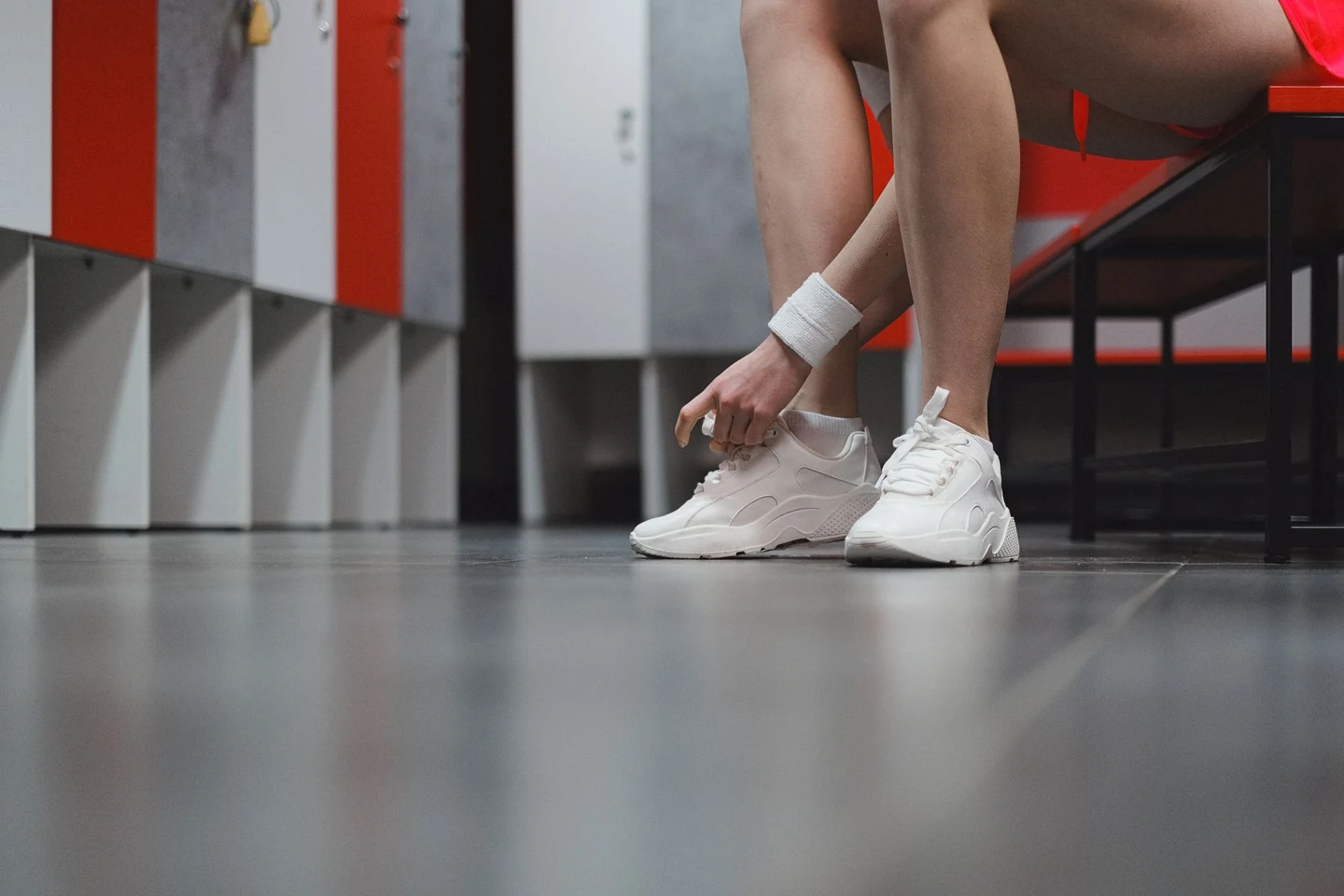
Keep outdoor and training footwear separate in your bag. Before leaving home, check the indoor soles for grit and make sure they are dry. If you cleaned the shoes the night before, allow time for them to dry fully rather than sealing damp footwear in a bag.
At the gym, change in the area staff indicate. On the way home, switch back before heading outside. That small habit matters more than repeatedly cleaning a pair that you continue to wear on the street between sessions.
After training, open the bag and let the footwear air out. Check laces and visible wear periodically. If the sole is coming away or the shoe no longer stays secure, arrange a replacement rather than relying on a quick adjustment each visit. You can keep a short packing note on your phone: indoor shoes, socks, training clothes, water.
Decide what you actually need to buy
Start with your current clean sports shoes, the gym’s requirements and the activities on your programme. If those line up, there may be no immediate purchase to make. If they do not, identify the specific mismatch: fit, cleanliness, stability during your exercises, or suitability for the main activity.
That gives you a better shopping question than “What shoes do people wear in Korean gyms?” It also avoids paying for features you will not use. For the wider arrival and shared-space routine, read our guide to Korean gym etiquette for foreigners. For footwear, the next step is simple: confirm the rule, test the fit, and pack the pair you intend to train in.
Train With BODY SMITH